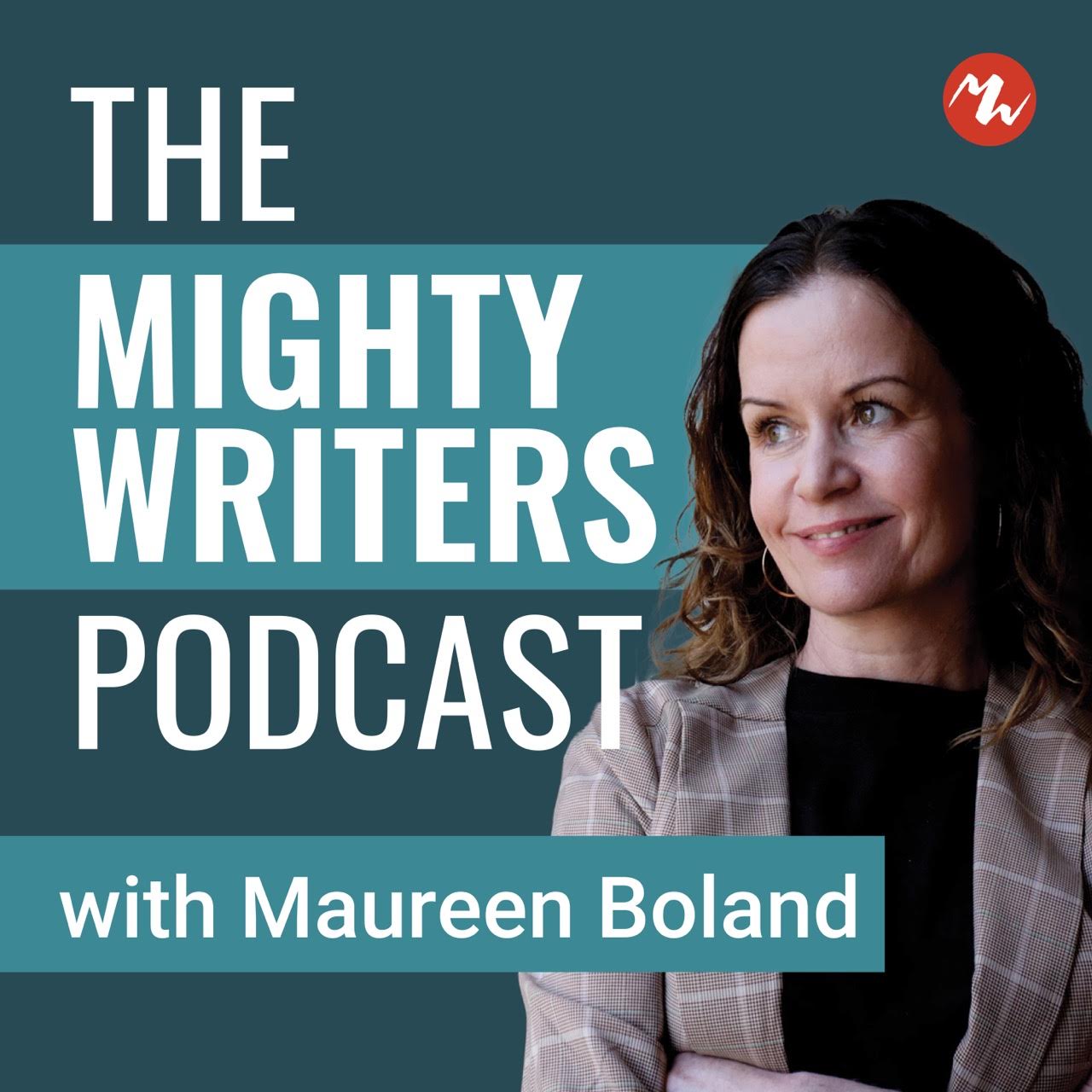
The Mighty Writers Podcast with Maureen Boland
Featuring stories inspired by the Mighty Writers community
Through decades of experience as a public school writing teacher, I know the power of storytelling and mindful listening. I’ve seen how an honest story, even one that looks unflinchingly at a sometimes brutal world, has the power to lessen isolation, despair and polarization.
This Mighty Writers podcast, like Mighty Writers itself, is a place to find clarity, compassion and community through the written word.
As Dr. Dachner Kelcher puts it when he talks about awe, we plan to tell stories that put us in the presence of "something vast and mysterious that transcends our current understanding of the world."
— Maureen Boland
Subscribe to The Mighty Writers Podcast with Maureen Boland:



At Mighty Writers, our days revolve around helping young people find their voices, which is why we’re especially excited when we connect with authors who speak to the issues that matter to them. In this episode, I talk to Candice Iloh, an award-winning author of young adult novels including “Every Body Looking,” “Break This House” and their newest release, “Salt the Water.”
Candice is a first generation Nigerian-American who grew up in the Midwest before coming to the East Coast. They attended Howard University and later taught creative writing to students of all ages in New York City public schools while living in Brooklyn.
Candice tells me about their background, their observations about young people, their writing process and why novels about queer and nonbinary youth matter.
We also talk about “Salt the Water,” their novel in verse featuring Cerulean, a free-spirited teenager experiencing post-pandemic high school in NYC.
I hope you’ll enjoy this conversation as much as I did.
Mighty Writers Blogcast
Want to read creative nonfiction contributions from our podcast guests? Go here.
In Philadelphia, one figure who needs absolutely no introduction is the Phillie Phanatic, the team mascot who is as iconic in these parts as Dr. J, Ben Franklin, or Rocky Balboa.
Beyond being a key fixture of Phillies' home games, the Phanatic shows up at playgrounds, schools, hospitals and all kinds of special events with one purpose: to bring happiness — especially to kids.
In this episode, I speak with Dave Raymond, the man who first brought the Phanatic to life in 1978. Dave spent 16 years in the green suit, entertaining thousands along the way.
Now a marketing expert, personal development trainer and coach, Dave is also a motivational speaker who talks about the power of fun and the tenets of positive psychology.
Listen in as we talk about the Phanatic’s inception, the business of mascoting and how Dave was saved by the power of fun.
Philadelphia is awash in grieving children and families. But it’s not all bad news, because where there are serious problems, there are humans at work on serious solutions.
In my years as a classroom teacher, I saw many organizations try to help students with problems like grief. Rarely did I see an immediate impact — that is, until I observed the work of Uplift, formerly known as The Center for Grieving Children.
Uplift’s therapists go into schools (and other places where kids gather) and convene groups of young people who have lost someone significant. Some of my students involved with Uplift moved from despondent and unfocused to engaged and hopeful after just six sessions. My only regret was that they couldn’t work with more of the kids in my school. It sometimes felt like they were only getting at the tip of an iceberg.
Because I believe so deeply that children need this kind of support, I invited Samantha Anthony, a senior clinician, to speak with me about her work facilitating therapeutic grief groups with youth in grades K-12. Like others at Uplift, Samantha also provides support for the families of grieving children.
Samantha and I talk about how grief presents itself in young people, as well as our own experiences with grief, her work with students at the Juvenile Justice Center, and what it means to say that grief is a social justice issue.
It’s a heavy but hopeful conversation about the good that comes when we acknowledge grief in community and with mindful empathy.
In the thousands of pieces of writing I had access to as a ninth grade English teacher in Philadelphia, certain themes emerged over and over. And when I met a young person named Semaj in a workshop I facilitated for Mighty Writers, I was struck by how his storytelling embodied those themes, including the way his everyday life was shaped by gun violence and an inequitable criminal justice system. Semaj embodies something else I’ve seen repeatedly: He really wants his story to be heard.
Semaj’s voice is memorable and beautiful for reasons far beyond his vulnerability and what he can tell us about broken systems, gun violence and injustice.
It’s also worth hearing because he shares wise advice for living in this deeply fraught place, time and place (no matter your zip code). He reminds us to reflect, meditate, accept, strive, connect, dream and heal.
In this episode, Yakquelin shares her family’s immigration story and what her life has been like as someone who crossed the southern border before she was able to walk. Even though she’s never known life outside of the U.S., and even though she has lived a life of exemplary citizenship, she still cannot claim to be a U.S. citizen. Yakquelin agreed to this interview because she knows she speaks for countless others who live with the daily consequences of a broken immigration system.
In this episode, Maureen speaks with Makiyah, a young writer who’s in transitional housing at Covenant House, about how she came to be homeless and what that experience was like. She also talks to Covenant House Pennsylvania’s Hugh Organ, who describes the remarkable strengths he’s seen in some of society’s most vulnerable people:

In this episode, we speak with award-winning Philadelphia Inquirer columnist Helen Ubiñas about her career path, themes in her writing, the challenges of being a woman of color in journalism, and why she created The Ñ Fund, a scholarship fund for Latinas who want to pursue a career in journalism. We’ll also speak with young Idaho journalist Mariela Esquivel Rodriguez, the first recipient of the The Ñ Fund for Latinas in Journalism award. (Photo by David Swanson c/o the Inquirer)
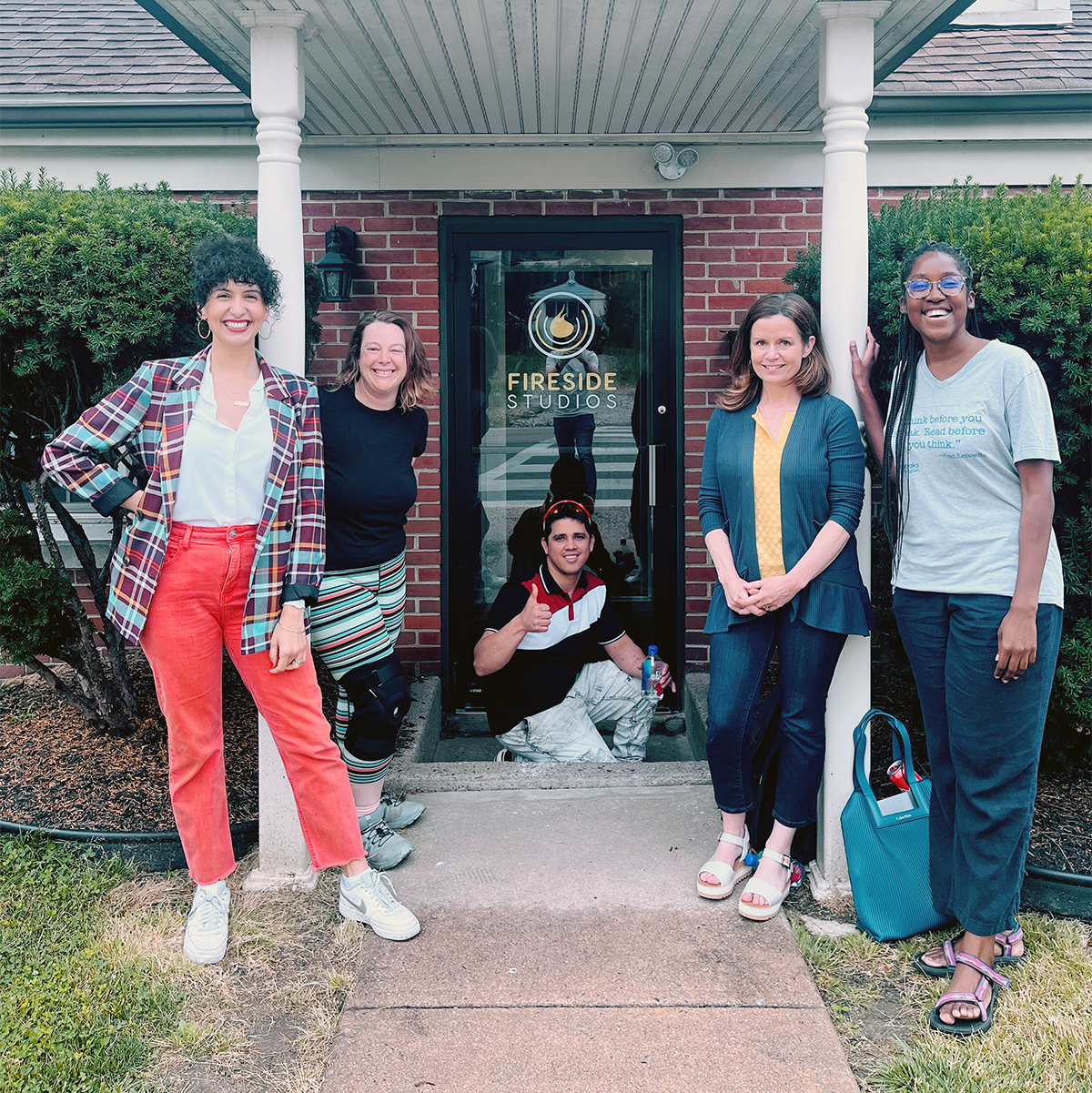
Kennett Square, PA, aka the Mushroom Capital of the World, is about an hour south of Philadelphia. Fully half of the U.S. gets its mushrooms from Kennett Square, and the majority of people who make that happen, often in substandard working and living conditions, are migrant farmworkers from Mexico, Central America and Venezuela. We speak with friends Anita Davidson and Nelson Alberto Contreras Gelves, who both work at a food pantry in Kennett Square.
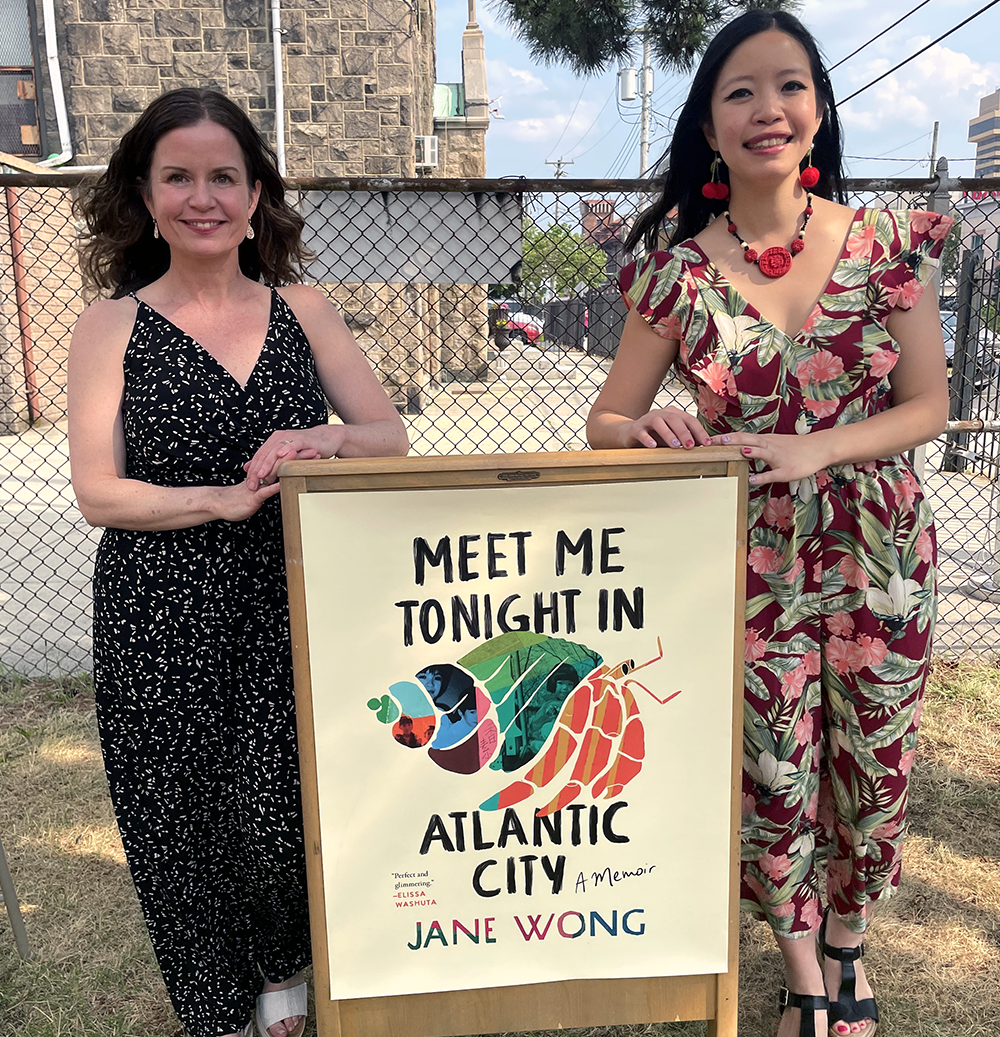
In this episode, Jane Wong, the award-winning writer and author of two books of poetry, “How to Not Be Afraid of Everything” from Alice James Books (2021) and “Overpour” from Action Books (2016) sits down with us to talk about her new memoir, “Meet Me Tonight In Atlantic City” from Tin House Press (2023). Kirkus calls the release “a generous, steaming stew of a book loaded with personality and originality and sprinkled with the fiery chili of rage.”
In January, Yale psychology professor Laurie Santos adapted her popular “Science of Well-Being” course for teen audiences. That curriculum was picked up by Philadelphia high school teacher Kate Reber, who offered the online course in the hopes that it would help her students — many of whom have been struggling with anxiety and depression — navigate their lives.
In this episode, we begin by talking to Kate about being on the frontlines of the youth mental health crisis, and how “The Science of Well-Being” fit into that. Then we speak with two of Kate’s seniors, Jada Brown and Hedaia Abuali, about taking the class.
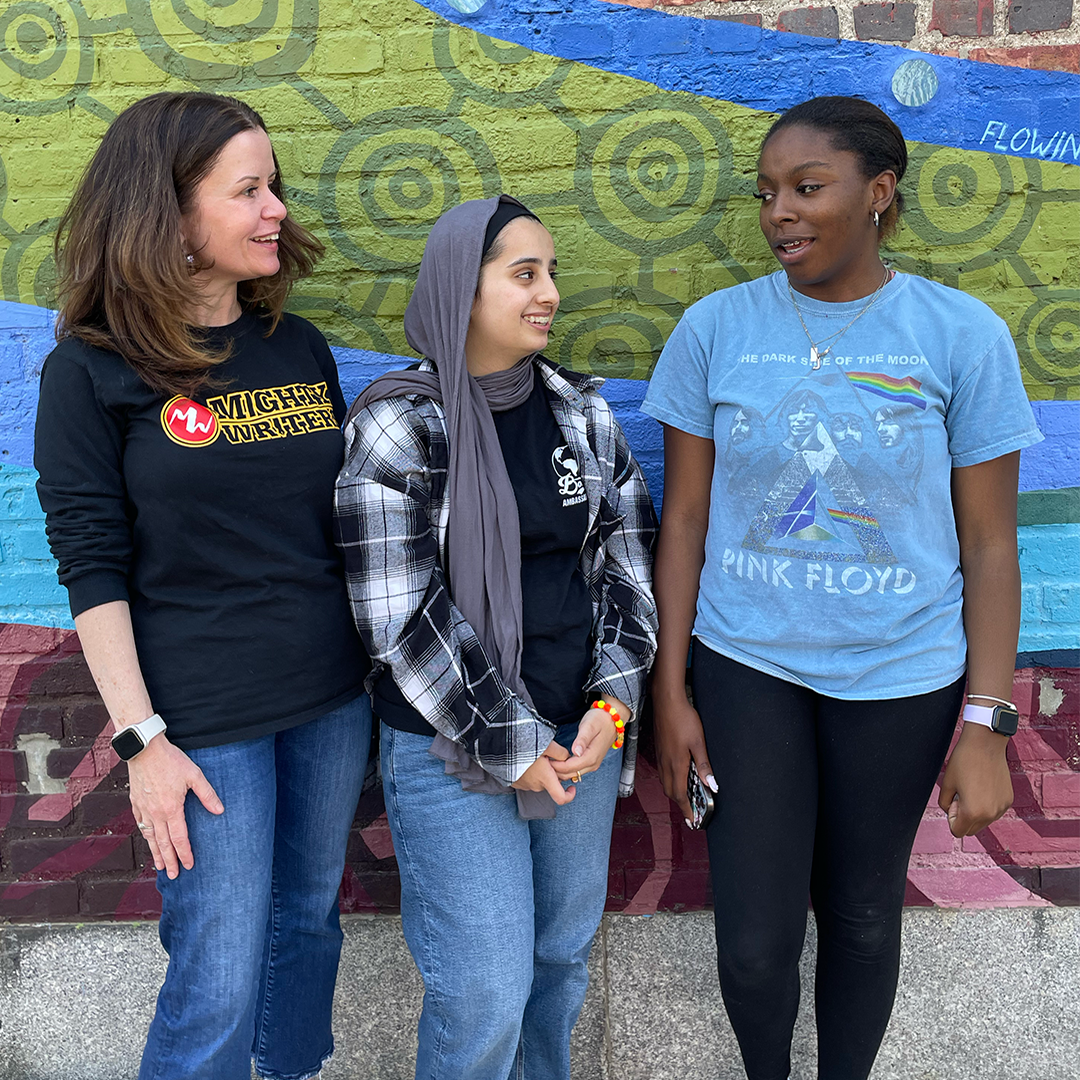
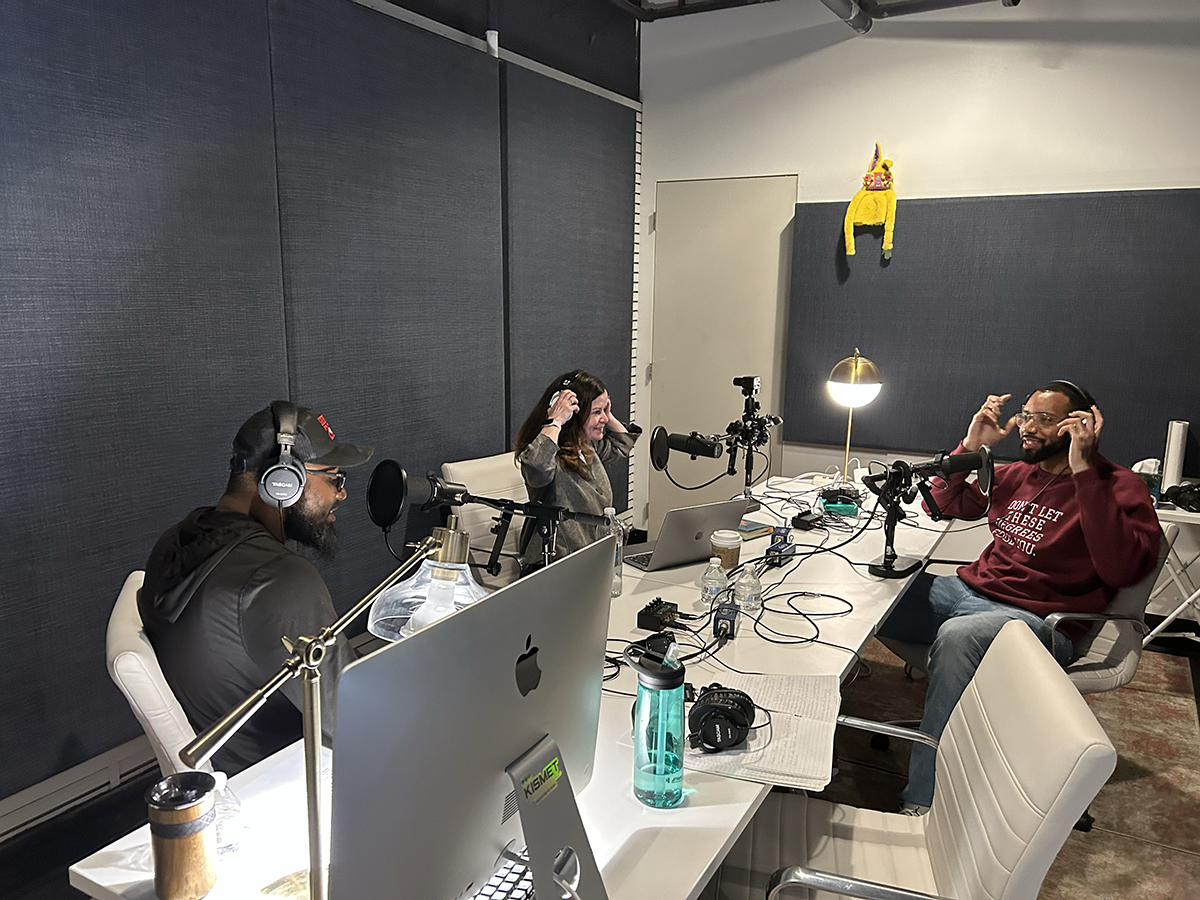
In this episode, Maureen's former student/regular podcast contributor Patrick Cooper and I sit down to talk to Joseph Earl Thomas about his critically acclaimed memoir “Sink,” a book that won high praise from the likes of Carmen Maria Machado, Kiese Laymon and many other prominent literary figures.
In 2021, mother, writer and yoga instructor Linda Geraghty was featured in the stirring and critically acclaimed documentary "Our American Family." The project, which was filmed over the course of a year inside Linda’s family home in Ardmore, Pennsylvania, documents the family experience as Nicole, Linda’s adult daughter, begins a journey of recovery from heroin addiction.

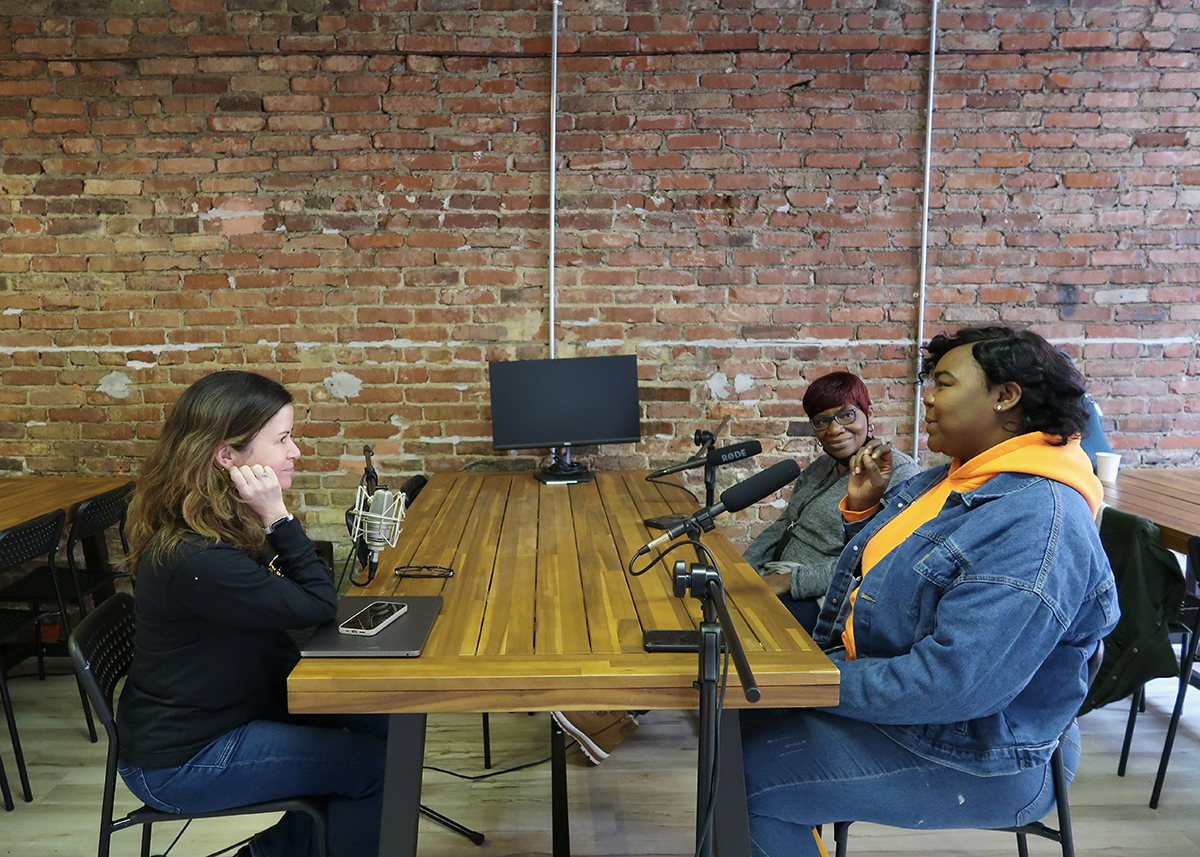
Thirty-year-old Akeiba Emerson shares her journey from foster care to adoption. Like too many children, Akeiba experienced abuse and neglect as she moved through 22 different foster care placements before she was old enough to read. But, thanks to a chance encounter with Judy Emerson, a remarkable single mother who was looking to grow her family, Akeiba went on to enjoy the best of what a good family life has to offer.
Maureen Boland is Mighty Writers' senior writer. A National Board-certified English teacher and recipient of a Lindback Award for Distinguished Teachers, Maureen has taught at Philadelphia's Roberto Clemente Middle School and Parkway Center City Middle College, and in New York City schools. She also teaches writing to bilingual students at La Salle University. Maureen lives in Philadelphia.

Stay connected!
Enter your email address below to receive our Mighty updates!
Mighty Writers is a class 501(c)(3) nonprofit organization established in 2009. All of our programs are free. We serve communities in and around Greater Philadelphia and New Jersey.