
Write On
by Kalela Williams
Eight Timely Books for the Month of May
May might be thought of as the month of spring flowers, but more importantly (though unfortunately only marginally heralded), it’s also Jewish American Heritage Month and Asian American and Pacific Islander Heritage Month. Perfect opportunity to connect with books that speak to the talent and extraordinary storytelling of AAPI and Jewish authors, as well as collective experiences within AAPI and Jewish American communities.
Between the misguided violence directed at Asians and Asian Americans over the roots of the pandemic, and the pandemic devastating India, it’s hard not to feel outrage when watching the news. It’s why I feel so much gratitude for books that can connect us.
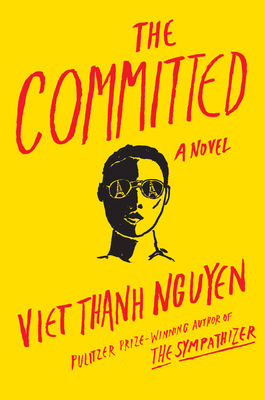 I’ve just finished reading The Committed by Viet Thanh Nguyen, a heavy book, like its predecessor, The Sympathizer, with thematic layers as deep and dense as bedrock. But both books speak to enduring issues: race and racism, colonization, nationalism, patriotism, capitalism, masculine identity, biracial identity, bicultural identity and even philosophy, all of which are woven into a riveting story.
The Committed isn’t for the faint of heart— Nguyen takes us through a deep intellectual dive as he pushes us into warehouse rooms filled with violent events and dark humor. But if you can take the heat, I suggest staying in this kitchen—though best to avoid the worst Asian restaurant in Paris, as described in this book.
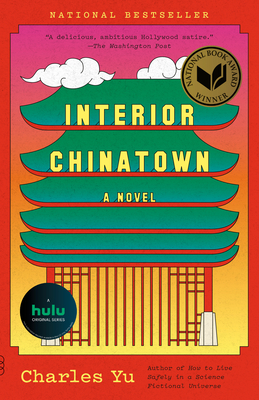 On my list to read soon is Interior Chinatown by Charles Yu. It too features a restaurant— likely one with a better Zagat rating than the one where the protagonist in The Committed finds himself. In this case, the Golden Palace is a second world for character Willis Wu — who, depending upon who’s perceiving him, feels as if he encapsulates every stereotype from Generic Asian Man to Disgraced Son. I’m looking forward to humor puncturing the sharp look at the way we label, typecast and frame others into images that don’t fit who they are. I also love a good family-history-mystery, which seems to be offered here.
 Another book I look forward to reading is Whereabouts, the latest by standout author Jhumpa Lahiri, the first she’s written in Italian and translated to English, though I’m expecting her lyrical and haunting prose to stand up through translation. The story follows a year in a life as a woman navigates an unknown city and faces her relationship with her mother, her grief after her husband’s death and a strange shadow that accompanies her as both a companion and provocateur of fear.
In addition to the pandemic, the tragic losses of Black people due to racial violence, unprecedented uprisings around the world and a historical election, 2020 saw the passing of beloved Supreme Court Justice Ruth Bader Ginsburg. When I think about the autonomy I have today as a woman, I don’t want to imagine what my life would be like had she not been in 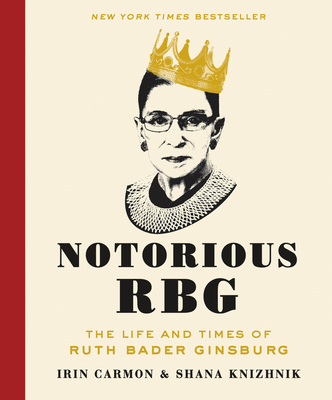 the public sphere. Being Jewish American History Month, it’s an apt time to reflect on her life and legacy with her autobiography: Ruth Bader Ginsburg: My Own Words and a biography, Notorious RBG: The Life and Times of Ruth Bader Ginsburg by Irin Carmon and Shana Knizhnik.
My Name is Selma: The Remarkable Memoir of a Jewish Resistance Fighter and Ravensbrück Survivor is a nonfiction book I want to read but feel trepidation about picking it up. Selma van de Perre was 17— the same age as so many of our Mighty Writers kids— when she learned she and her family would be sent to concentration camps. Remarkably, she changed her appearance and became a resistance fighter until her luck ran out and she was forced into Ravensbrück. I know this will be a difficult, even if ultimately inspiring, read. How fortunate we are to have her testimony of one of history’s most devastating chapters.
 I’d also like to revisit the iconic author Philip Roth, whose novel Nemesis is one I’ve never read. Like much of his fiction, this story is set in Newark, N.J., the same city where Mighty Writers is beginning to reach kids. During the summer of 1944, a young, athletic playground director is caught in the midst of a devastating disease that is stealing the youth, vitality, and sadly, the lives, of others around him in a fictionalized account of the polio epidemic. Clearly, there’s no avoiding the irony in the release of this book.
This spring is a time to reflect on where we can go next and how our histories have taken us to where we stand now. The trauma within ancestral memories of many Jewish Americans, and the threat of trauma that Asian Americans face with their communities and homelands being blamed for the pandemic, seem to be a tragic link of two disparate heritages. Books provide us with legacies to celebrate, and reminders of what we must not repeat.

Kalela Williams (kwilliams@mightywriters.org) is MW’s Director of Writing.
Stay connected!
Enter your email address below to receive our Mighty updates!
Mighty Writers is a class 501(c)(3) nonprofit organization established in 2009. All of our programs are free. We serve communities in and around Greater Philadelphia and New Jersey.