Write On
by Kalela Williams
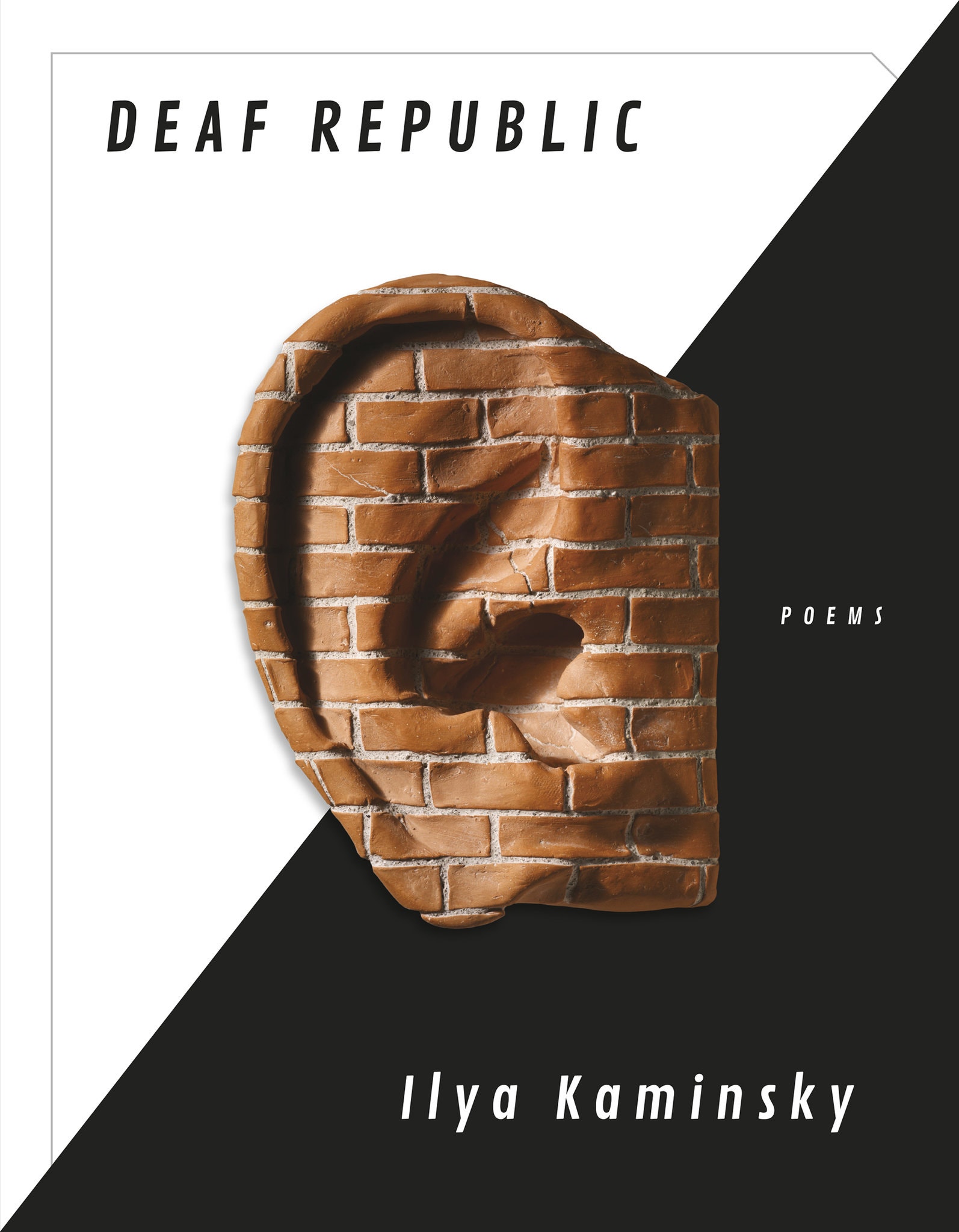
Deaf Republic
There is still a long road ahead, with disability activists leading the way.
“This extraordinary poetry collection is structured as a two act play in which an occupying army kills a deaf boy and villagers respond by marshaling a wall of silence as a source of resistance… A visit to this republic will not leave the reader unchanged.”
This is the New York Times, speaking of Deaf Republic by Ilya Kaminsky, a Ukrainian American poet who has won fellowships from the Guggenheim Institute, the NEA and other internationally recognized institutions.
Kaminsky is hard of hearing, and while his work is always worth turning to, it’s especially resonant in the month of July. The hard-won Americans with Disabilities Act, signed on July 26, 1990, and achieved after decades upon decades of activism and advocacy, sees its 31st anniversary this year, with many in the disability community celebrating Disability Pride Month.
Like so many gifted writers whose identities have been pushed to the margins, Kaminsky’s disability informs and beautifies his work. His work glows on the page, but hearing him read is an experience. He doesn’t so much speak as sing, his lines launching to life by the cadence of his voice as if he is a cantor of poetry.
Books, essays, and other works by people with disabilities are all around us. Right before the pandemic shut the world down, I had the honor of listening to author, lawyer and activist Haben Girma during an American Library Association conference. Girma, who is deafblind, reminded the audience that it’s because of the deaf and hard of hearing community that the world enjoys and utilizes newer technologies like, for instance, text messaging. In fact, the precursor to text messaging, TTY (teletyping device), was invented by Robert Weitbrecht, a deaf electronic engineer. A group of deaf friends later streamlined this process, and texting was born.
Disability is an opportunity for innovation, Girma says, and her book, Haben: The Deafblind Woman Who Conquered Harvard Law, carries readers from her parents’ homes in Ethiopia and Eritrea, to the adventures she experienced, and into the hallowed halls of the Ivy League.
Other authors and editors, like Keah Brown, Sara Nović, and Alice Wong are creating innovation on the page with their candid and lyrical prose and curatorial skills. On a local front, I enjoy the beauty of Dan Simpson’s work. Simpson is a blind Philadelphia poet and musician who has written for the New York Times and published in numerous prestigious literary magazines. One of his essays appears in About Us: Essays from the Disability Series of the New York Times, a compelling collection which writers and readers might consider a bookshelf staple.
In the more than three decades since the ADA was signed, there is still a long road ahead, with disability activists leading the way. The work of writers with disabilities is more than setting, and it’s more than scenery or soundtrack— it’s a summons for all of us to move forward.

Kalela Williams (kwilliams@mightywriters.org) is MW’s Director of Writing.
Stay connected!
Enter your email address below to receive our Mighty updates!
Mighty Writers is a class 501(c)(3) nonprofit organization established in 2009. All of our programs are free. We serve communities in and around Greater Philadelphia and New Jersey.