
Write On
by Kalela Williams
How Did I Celebrate the Recent Holiday Weekend?
By reading about female characters written by admirable women.
If you're like me, you spent the recent holiday weekend at a friend’s cookout. Or now that people are gathering again, maybe you checked out some festivity in your neighborhood. Or you comforted your cowering pets (and your own frazzled nerves) while some guy on your block detonated what seemed like metric tons of fireworks.
I did all of the above— but I also caught up on a little reading. Independence Day weekend meant reading about the escapades of independent female characters in novels written by admirable women in their own right.
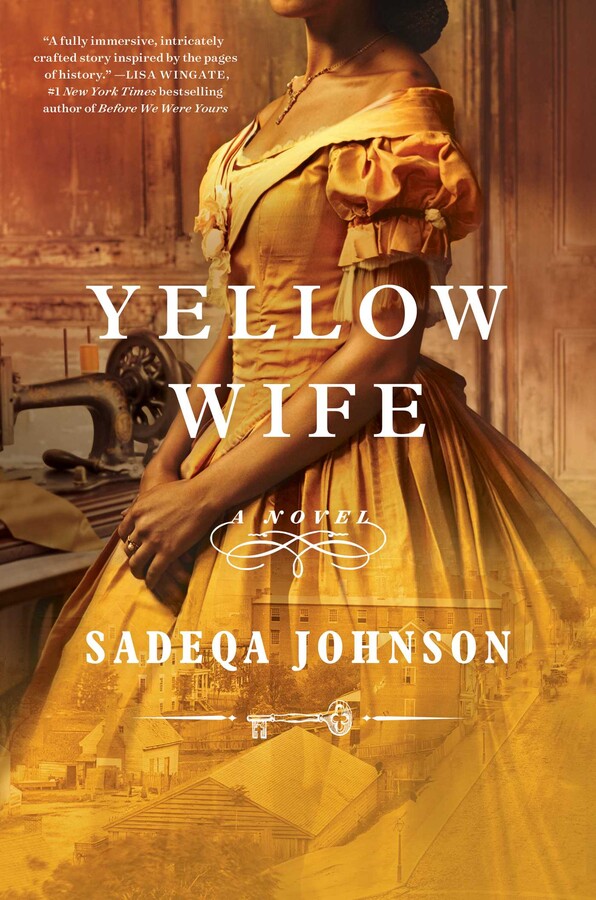 Yellow Wife is a much-talked about novel exploring the story of a fictional character, Phoebe Delores Brown, who spent her life enslaved on a Virginia plantation. Phoebe finds love with an enslaved man named Essex, but is torn from him when she is sold, landing in a notorious “slave jail” in Richmond, and imprisoned with hundreds of others by a cruel enslaver who they call “the Devil.” The only way to save herself, her son with Essex, and her daughters with the Jailer is to endure assault as his so-called “wife.”
Yellow Wife is fast-paced fiction, but it’s grounded in history. I was so keen to read this book because shortly before the pandemic, I traveled to Richmond for a wedding. While there, I spent a few extra days visiting historical sites, including walking the entirety of the Richmond Slave Trail, a self-guided walk outlining the history of the institution in the city. The trail begins at a lonely boat launch and fishing park on the west end of the James River, and ends in the middle of the city, at the former site of what was called Lumpkin’s Slave Jail by many— and “The Devils’ Half-Acre” by those who endured its horrors. It was an emotional walk.
More than a hundred years ago, a Black woman named Mary Lumpkin lived in the jail owner’s quarters with the “Devil,” Robert Lumpkin. Sadeqa Johnson, author of Yellow Wife, undertook extensive research to try to recreate a story that might somewhat follow the real-life Mary’s. The author too was captivated by her walk along the Slave Trail and decided to veer from her usual contemporary fiction into a historical novel. As I finished this novel, I constantly asked myself: What would I do? I don’t have an answer, but it was a wrenching question to consider.
With the publication of Yellow Wife, Johnson has become a much more notable writer, but Stacey Abrams is a household name. Some of us cheered her on as she ran for governor of Georgia, or as she helmed a historically large and effective voter registration and turnout drive before tirelessly pressing for equitable voting rights in her state. As someone born and raised in Atlanta, I especially support her work.
But many of us don’t know that Stacey Abrams is also a writer. She has written several romance novels under the pen name Selena Montgomery, but her latest book, While Justice Sleeps, is a political thriller featuring a character like Abrams herself—driven, fearless, and independent.
Avery Keene is twenty-six, working as a law clerk for a Supreme Court Justice. Already ill with a fictional condition called Boursin’s Syndrome, the judge unexpectedly falls into a coma. Then Avery is startled to learn he had appointed her as her executor—and that he had knowledge of a complicated ring of corrupt scientific research firms, a horrific ethnic cleansing plot, and the complicity of the U.S. government, including fictional President Brandon Stokes. The judge left Avery difficult-to-decipher clues, plunging her into danger and intrigue as others around her fall victim to deathly plots to silence them.
I tried to follow Avery’s clues, and each time I’d think, “I’m not smart enough to read this book.” However, I loved the challenge. While Justice Sleeps is an intelligent, heart-pounding page turner.
On my queue is The Other Black Girl by Zakiya Dalila Harris. It too features a woman in her twenties, an editorial assistant, Nella Rogers, who is the only Black employee at a big publishing house. Having enough with microaggressions, she’s excited when another Black woman joins the team. But the next thing she knows, she’s receiving hostile messages—could they be from the other Black girl? Nella is plunged into a twisty, winding thriller in the likes of Avery Keene’s—or so I’m told by the book flap.
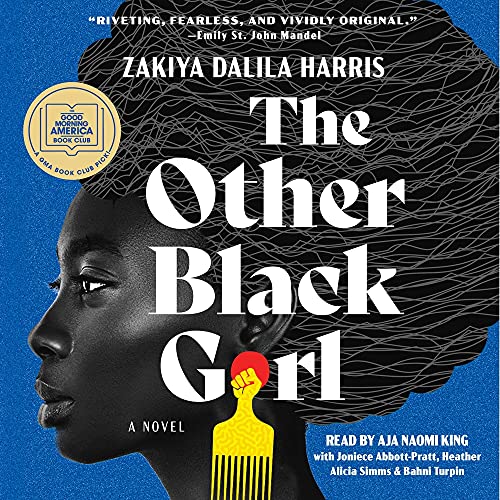
This is Harris’ first novel, but she knows her setting well. She worked as an editorial assistant in a big publishing house, as one of the only Black women on staff. She’s said in an interview, “I thought: why does it feel like we’re living in 1955 still, in terms of what we value? Publishing is such a rich, easily spoofable world.” I get it! I’ve had spoofable jobs myself.
So after too many grilled burgers and coaxing scared cats from under couches, reading books about fictional independent women written by independent real life women was a welcome way to end my weekend nights this holiday weekend.

Kalela Williams (kwilliams@mightywriters.org) is MW’s Director of Writing.
Stay connected!
Enter your email address below to receive our Mighty updates!
Mighty Writers is a class 501(c)(3) nonprofit organization established in 2009. All of our programs are free. We serve communities in and around Greater Philadelphia and New Jersey.