by Kalela Williams
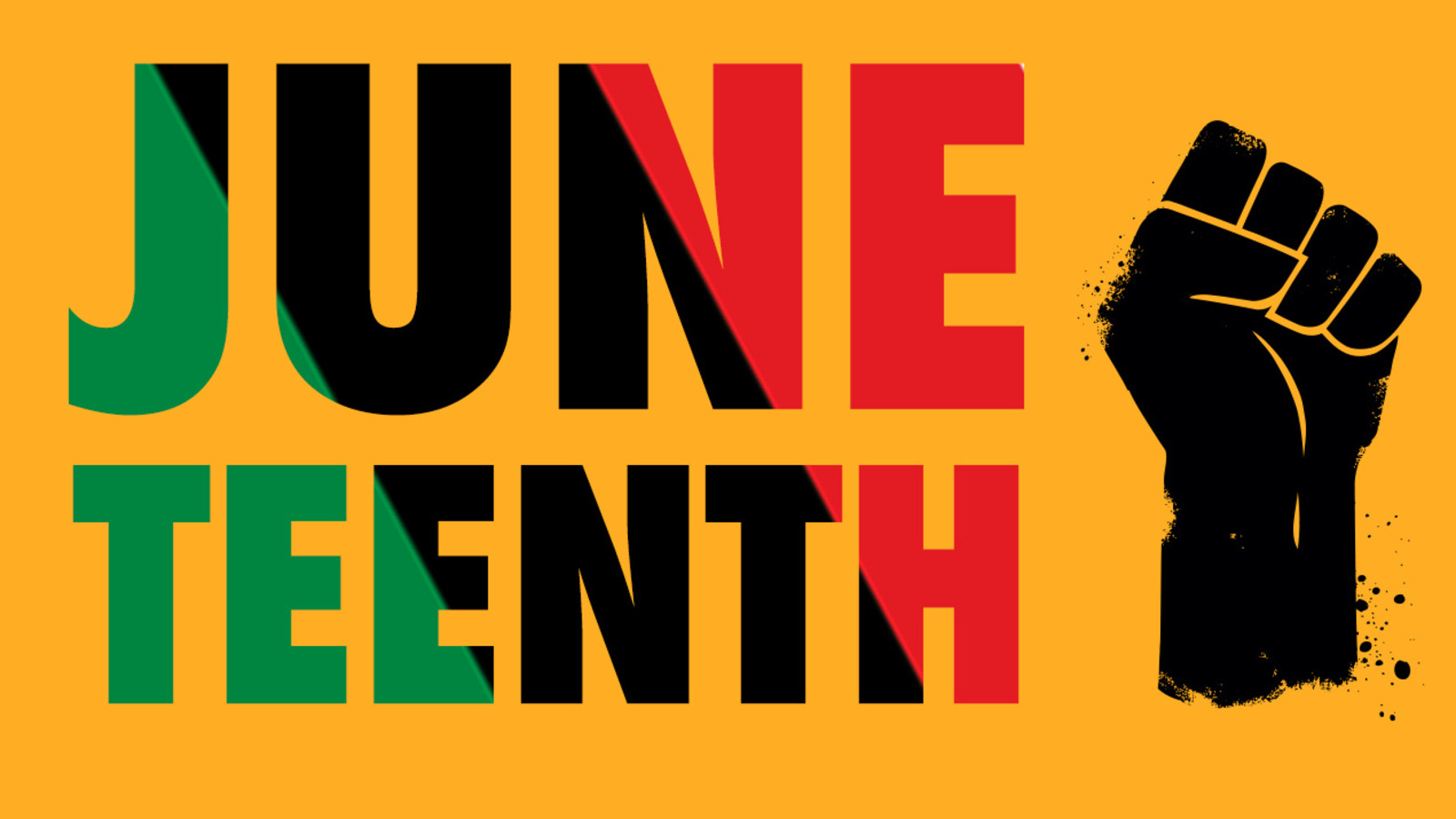
Why Juneteenth is Our Independence Day
On the evening of Thursday, January 1, 1863, Emilie Davis might have slipped her palm-sized diary from a deep pocket beneath her gown and petticoat, spreading it open upon the small table strewn with fabric scraps and sewing detritus in her boardinghouse room.
Breathlessly, this young dressmaker reflected, "to day has bin a memorable day." She reported that all of the churches in her neighborhood had been open that night. After attending service, she'd gone to a friend's party to celebrate.
Emilie, as well as many other free African Americans in Philadelphia's historically Black Seventh Ward, marked the Emancipation Proclamation with "quite a jubilee." Unlike her four million brethren in bondage by this time, Emilie had never been enslaved, but she was an ardent abolitionist.
President Abraham Lincoln had declared an end to slavery in states that were not in rebellion against the Union, which included Texas. But everything's big in Texas, including opposition to justice, so thousands of people remained enslaved.
In fact, ever since the capture of New Orleans in 1862, planters in Louisiana, Mississippi, and other regions saw Texas as the last holdout of slavery, fleeing there in droves and forcing 150,000 enslaved people to join them.
Fast forward a couple of years. In the village of Appomattox Court House on April 2, 1865, Confederate General Robert E. Lee surrendered his army of Northern Virginia to Ulysses S. Grant. It was a signal that the South had lost the war and sure enough more surrenders followed in Deep South states and Tennessee.
But in the west, the fighting dragged on. The last battle on Texas soil concluded on May 13, 1865 at Palmito Ranch. Finally, in May of 1965, General E. Kirby Smith of the Army of Trans-Mississippi, marked the last major Confederate command's surrender in Galveston, Texas. This set off looting and, sadly, violence against Black Americans by ex-Confederate soldiers.
To try and restore order, Union General Gordon Granger arrived in Galveston on June 19, 1865. He wasted no time in reading General Order 3, which declared in part: "The people of Texas are informed that in accordance with a Proclamation from the Executive of the United States, all slaves are free."
There seems to be no strong historical consensus as to why it took the more blandly-named General Order 3, and not the Emancipation Proclamation, to free 250,000 enslaved Texans. A few theories are that with no significant Civil War battles in the state, Union army presence was limited. The vastness of Texas, coupled with the century's notoriously bad roads, meant news was slow to travel in the interior of the state.
But it didn't mean that news didn't travel at all. Especially since the city of Galveston boasted one of the busiest ports in the world, exporting cotton across the ocean by the tonnage.
So in port cities like Galveston, news spread like plagues, or roaches (also big in Texas). In fact, in her new memoir and essay collection, On Juneteenth, historian Annette Gordon Reed describes that two days before General Granger arrived, Black men hauling cotton on the wharves shouted that they were free.
To me, the contention that historians have discussed makes sense: enslavers in Texas watered their cotton crops with the last drop of sweat from forced labor, waiting until their own hands were forced, as they tried to eek through that last harvest.
Either way, the "news" was met with careful celebration by Texas' African Americans as many whites lashed out. In spite of immediate and continuing violence, Juneteenth-a mashup of "June" and "nineteenth," was celebrated in earnest in 1866.
Time passed. People passed on their traditions. As thousands of enslaved Texans left the state in the immediate years, looking for kin lost to sale and separation, they celebrated with reunited or newfound family.
In 1900, a massive hurricane leveled the little island city, killing as many as 12,000 people. Many Black Texans buried their dead, packed up what they had, and tried to pick up the pieces elsewhere. They clung to the comfort of Juneteenth, sharing it in their new homes. In 1980, Juneteenth became a Texas holiday.
Why does Juneteenth resonate so strongly now, more than 150 years later-and why does it resound around the country?
Because Independence Day hasn't always felt meaningful to Black Americans. In Philadelphia during Emilie Davis' time, African Americans were often banned from festivities. William H. Johnston of the Seventh Ward's Banneker Institute, an intellectual society for Black men, orated on July 4, 1859, "The history of this country… presents many examples of glaring inconsistency and multiplied instances of bad faith."
On July 4th, 1863, months after excitedly scribbling about the Emancipation Proclamation, a more subdued Emilie Davis wrote, "the fourth has bin very quiet up in our part of the city."
Perhaps she and her neighbors in this Black, abolitionist community shared the same ambivalence. If she had known Juneteenth, perhaps she would've felt it's our holiday, one we carved out, for an independence we're still fighting for.

Kalela Williams (kwilliams@mightywriters.org) is MW's Director of Writing.
Get in TouchMighty Writers is a class 501(c)(3) non-profit organization established in 2009. One hundred percent of the programs we offer are free. We serve communities in and around Philadelphia, PA, as well as in Camden, Newark and Atlantic City, NJ. We also run writing workshops in Washington Heights, NYC.
Stay Connected!
Enter your email address below to receive our Mighty updates!
0 Comments